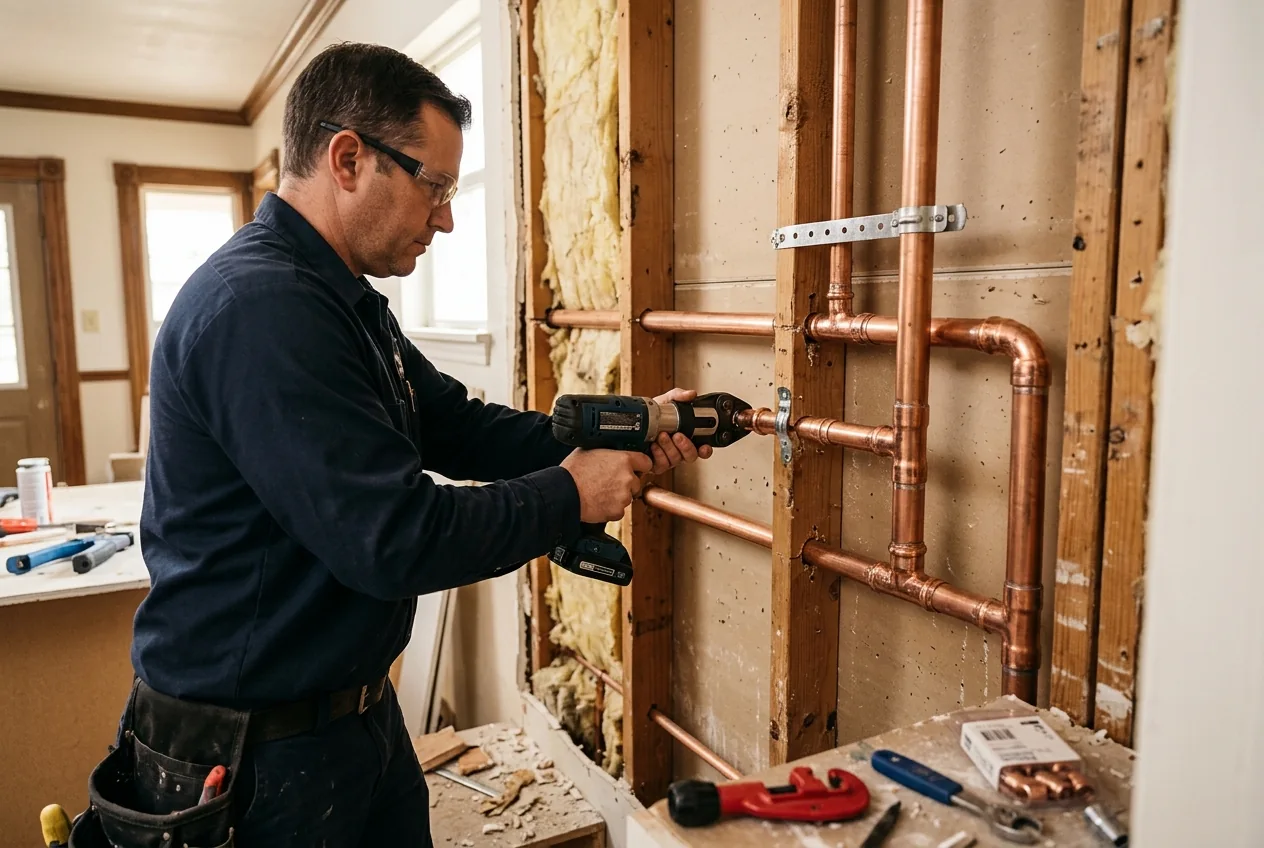
Copper is familiar. The installation details still matter.
Maybe you trust copper because it is what your house has always had. Maybe an older copper system has developed repeated pinhole leaks and you want to know whether replacing it with more copper is sensible. The material by itself does not answer either question.
Water chemistry, existing corrosion, how the lines are routed, connection methods, and the condition of the rest of the supply system all deserve a look. A copper repipe replaces agreed domestic water lines with properly specified rigid piping, not necessarily every drain, gas line, or connection to the public main.
West Fork Repiping Co. helps you compare replacement options for your Fort Worth property and coordinates plumbing work with appropriately licensed and insured contractors. We want you to understand the route, installation method, and finish work before making the decision.
A good copper quote explains more than pipe material
Rigid copper usually needs deliberate turns, supported runs, and enough room for correctly made joints. A proposal should say whether soldered or approved press connections are planned, how nearby materials will be protected, and which existing parts will stay.
Copper installation can be a good fit in visible mechanical areas or layouts where rigid piping is preferred. Other properties may benefit from flexible routes. If the home has already suffered pinhole leaks, discuss potential causes rather than assuming new copper alone resolves every contributing factor.
Comparing copper to PEX is useful, but only when the bidders cover the same fixtures, valves, testing, permits and wall restoration.
Why access and connections affect copper cost
Copper is a familiar rigid supply material, but installation method, water chemistry and route geometry still affect the best choice. Hidden branches may not match visible pipes, and earlier repairs can leave mixed joints or isolated runs that complicate an apparently simple replacement. The contractor should inspect the locations where the system can be accessed and discuss assumptions about concealed conditions before committing to a final route.
The copper proposal should identify pipe grade where applicable, approved joining methods, protected penetrations and any older sections left in place. If you have recurring pinhole leaks, discuss their likely cause before installing an otherwise similar new system.
A clear plan comes from what is visible and verifiable at the property: existing material, connections, affected rooms, access limits and the building’s normal use. Its neighborhood alone cannot determine the pipe condition.
Address the reason the old copper failed
If you are replacing copper after repeated pinhole leaks, ask why the original lines deteriorated. Water chemistry, past repairs and physical damage can matter. Putting new copper back along the same path without considering those issues leaves important questions unanswered.
A clear proposal identifies pipe specification, joining method, transition points, wall access and tests. Do not assume rigid copper is automatically harder or easier for every building. The route and workmanship determine the disruption.
Plan the connections and finishing work together
A material comparison that leaves out access holes, fixtures, testing or drywall is not a complete price comparison. Ask for the finished system, not just a count of copper pipe lengths.
What affects copper repiping cost?
Price depends on fixture count, pipe lengths, branch routing, labor access, material, finishes, site restrictions and required permit or inspection work. Water conditions, access and material cost In occupied commercial or multifamily settings, tenant coordination and work-hour restrictions can alter the project as much as the raw pipe quantity.
A responsible estimate should specify replacements by area and material, call out any exclusions and state how changes arising from concealed conditions are approved. Published regional pricing examples for ordinary whole-house repiping should not be used as fixed rates for different scopes. For an accurate quote, the property details and contractor assessment control.
Fixtures and hot/cold branches, joining methods, isolation, testing and applicable permit responsibilities.
Drywall access and patching, paint, ceiling finishes, tile, cabinetry, removal of old material and unforeseen damage.
Questions worth asking before you commit
Will new copper solve my pinhole leaks?
It may replace the affected worn piping, but the cause and extent of prior leaks should still be assessed. Water conditions, installation details and the remaining network affect the choice.
Is copper better than PEX?
Both can be viable. Compare the route, number and type of connections, protection requirements, labor and included restoration rather than assuming one material suits every property.
What does a successful copper replacement leave you with?
You should know where your shutoffs are, which runs were replaced, what joints were made, what testing was completed, and whether walls and ceilings will be patched by the plumbing contractor or a separate trade.
A tidy-looking copper line is not proof the full system is functioning as intended. Accessible verification and a clear closeout process matter.
If your home has a mixture of old and new copper, make sure the quote shows what is being kept. A clean new line behind one open wall does not automatically resolve corrosion, pressure or leak complaints elsewhere. Ask the contractor to explain how the proposed replacement addresses the symptoms you reported and how you can verify that the finished system works properly.