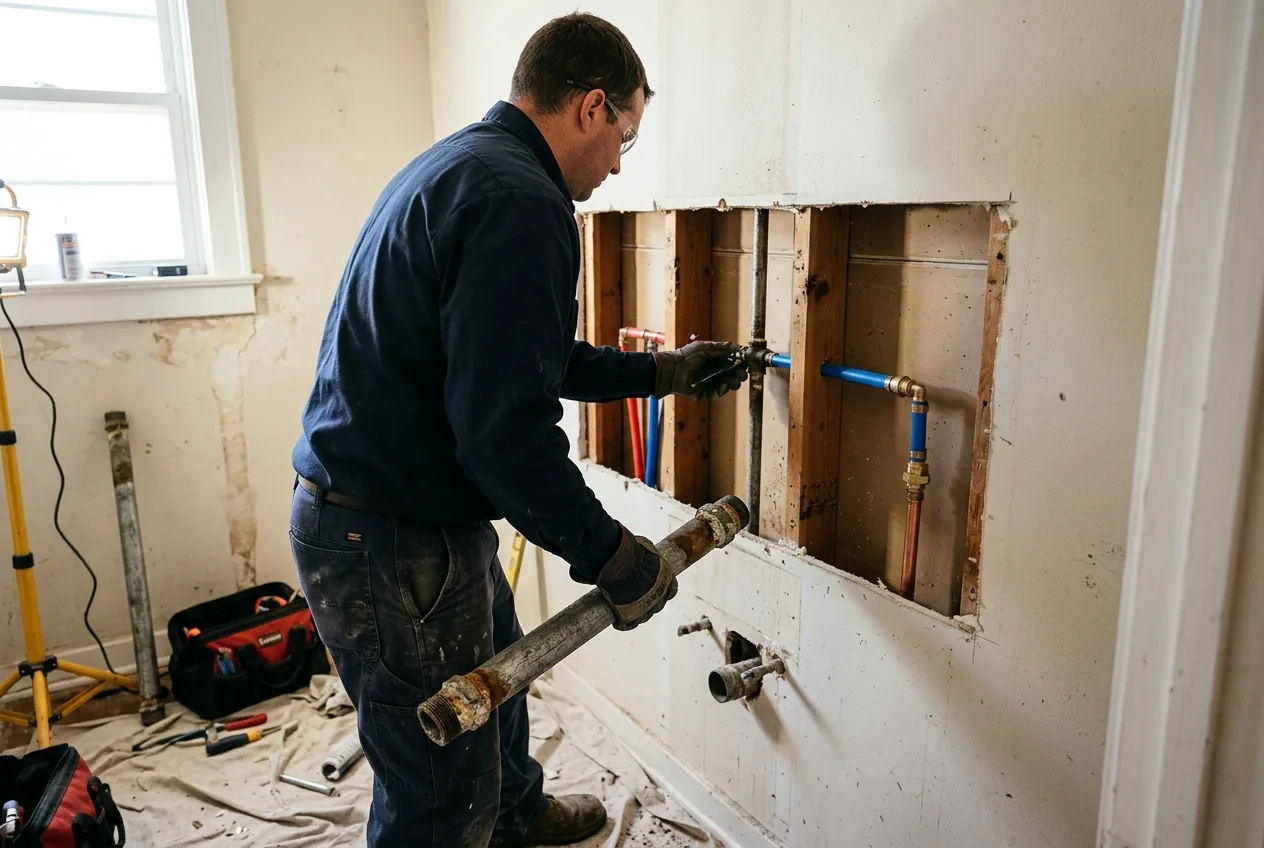
Turning on the tap should not be a guessing game
The shower slows to a trickle when someone uses the kitchen sink. Water comes out brown after a period away. You have had a plumber clear one restricted section, but the next room still has problems. In an older property, galvanized steel supply piping can be part of that story.
Inside old galvanized pipes, corrosion and deposits may narrow the passage carrying water. A valve, fixture cartridge, or incoming supply issue can produce similar symptoms, though, so we start by identifying the material and locating the restriction. The right solution may be a targeted branch replacement or a broader repipe.
West Fork Repiping Co. helps Fort Worth owners assess failing water-supply lines and coordinate properly licensed contractor fulfillment. We explain the difference between interior piping and the meter-to-home service line so you know what your quote actually covers.
Replacing a rusty section may not fix the next one
An isolated galvanized elbow with heavy buildup can cause problems at one fixture. If similar pipe runs throughout the property are also deteriorating, swapping one short section might leave the bigger issue untouched. That is why the extent of the older material matters more than one dramatic piece of rusty pipe.
Ask for identification of the piping in the kitchen, bathrooms, laundry area, and any accessible attic or crawlspace branches. Past remodels can leave a mix of galvanized, copper, and PEX behind the walls.
The new route should specify compatible transitions and how the older lines are isolated. Water quality and pressure complaints should be checked again when the work is completed.
Why galvanized pipes lose flow
An old galvanized interior line may restrict flow or shed deposits. A city-owned service line inventory does not establish the condition of interior plumbing. Hidden branches may not match visible pipes, and earlier repairs can leave mixed joints or isolated runs that complicate an apparently simple replacement. The contractor should inspect the locations where the system can be accessed and discuss assumptions about concealed conditions before committing to a final route.
The most useful galvanized replacement quote says which restricted or corroded runs will be changed, where transitions to newer materials occur and whether the exterior service line is included. Brown water or weak flow alone should not be mistaken for complete proof of pipe condition.
A clear plan comes from what is visible and verifiable at the property: existing material, connections, affected rooms, access limits and the building’s normal use. Its neighborhood alone cannot determine the pipe condition.
Replacing the right pipes restores more than appearances
Rusty-looking water can come from several places. If galvanized interior supply lines have significant internal deposits, simply installing a new faucet will not widen those constricted passages. But neither will replacing a random branch fix a pressure-control problem.
Review which fixtures are affected and which accessible sections are actually galvanized. If past repairs left mixed piping, identify safe transition points and separate the home’s internal lines from the water service outside.
Separate an old-pipe problem from an upstream issue
If pressure remains weak after replacing the damaged interior branch, a regulator or incoming supply problem may still need attention. Diagnose both before assuming the next section must also be replaced.
What affects galvanized pipe replacement cost?
Price depends on fixture count, pipe lengths, branch routing, labor access, material, finishes, site restrictions and required permit or inspection work. Diagnosis of supply restrictions, accessible runs and separate service lines In occupied commercial or multifamily settings, tenant coordination and work-hour restrictions can alter the project as much as the raw pipe quantity.
A responsible estimate should specify replacements by area and material, call out any exclusions and state how changes arising from concealed conditions are approved. Published regional pricing examples for ordinary whole-house repiping should not be used as fixed rates for different scopes. For an accurate quote, the property details and contractor assessment control.
Fixtures and hot/cold branches, joining methods, isolation, testing and applicable permit responsibilities.
Drywall access and patching, paint, ceiling finishes, tile, cabinetry, removal of old material and unforeseen damage.
Questions worth asking before you commit
Is rusty water always caused by galvanized pipes?
No. Water discoloration can have multiple sources, including fixtures or the water heater. Identify whether it affects hot water, cold water or several fixtures before concluding that interior galvanized lines need replacement.
Will one new pipe restore full water pressure?
Only if that section caused the restriction. Internal buildup can affect several older runs; a regulator, shutoff or fixture may also be responsible. Ask for an assessment of the actual pressure loss.
What homeowners should ask about rusty water
Where is the discoloration showing up: one faucet, only hot water, or the whole house? Those answers help separate pipe deposits from heater or supply-side problems. Bring a list of affected fixtures when you request a quote.
Before opening walls, ask whether the quote includes replacing the accessible old material throughout the agreed area, reconnecting fixtures, testing, and restoring access openings.