How do you replace water lines without disrupting the whole property?
When an aging supply system keeps producing leaks, the nuisance is not limited to the plumbing bill. A tenant loses water, a storage area must be protected, or an occupied shop needs another visit. Haltom City has both established residential areas and working commercial properties, and the replacement plan needs to respect that difference.
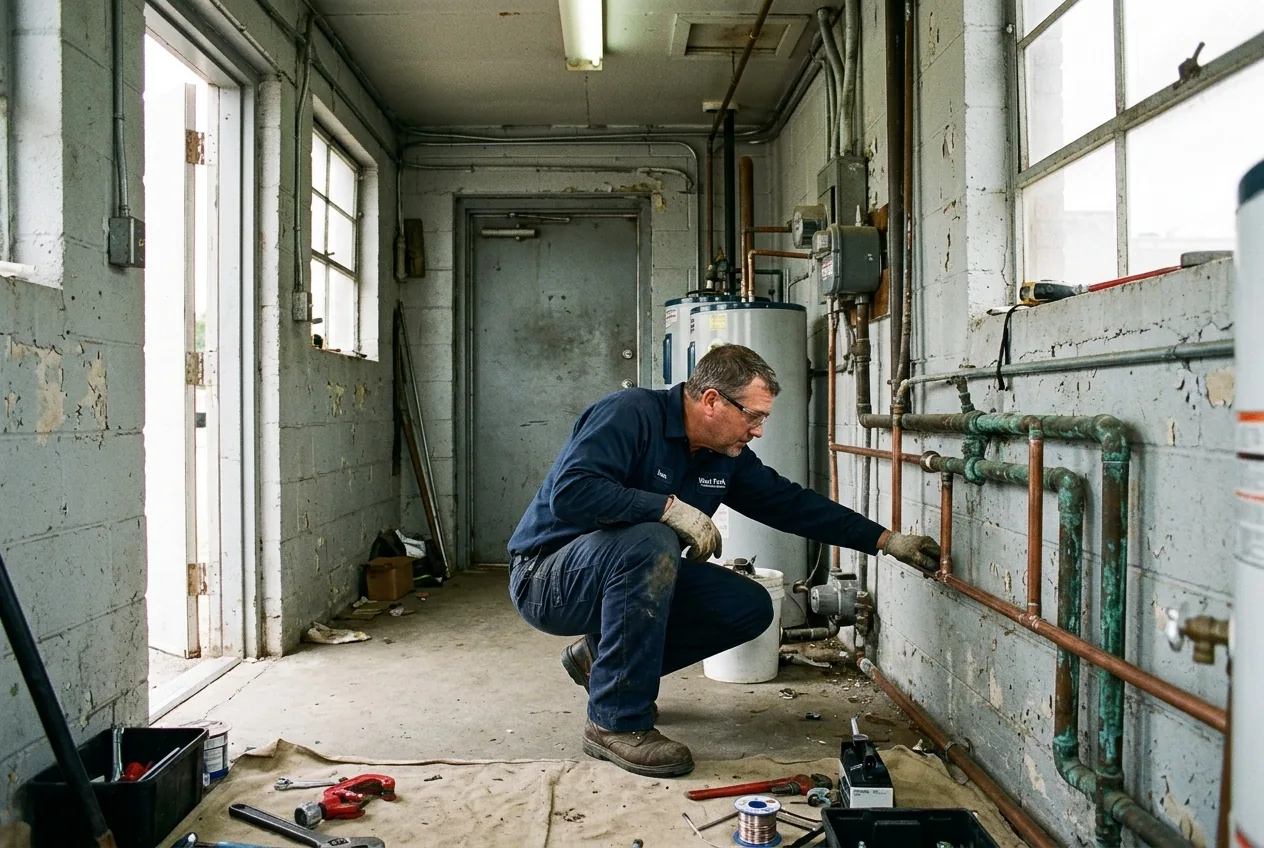
An older house may need selective wall or ceiling access. A shop or light-industrial building may require a staged shutdown to keep unaffected areas operating. We help establish what the water lines actually serve before a contractor quotes the route and schedule.
If you have had several repairs in a short period, we can help you weigh whether replacing the worn supply network is more sensible than continued patching. The answer should be based on the property and observed pipe condition, not a marketing rule.
Find the right scope for homes and active businesses
For a homeowner with recurring leaks, the concern may be another hidden failure. For a shop owner, a water outage can also mean lost operating time. We help define the problem and whether a partial replacement can isolate it.
Ask which valves control the affected section, what materials remain in service, and how protective barriers or tenant access affect the installation. That is a better starting point than a generic building-wide replacement recommendation.
Look for mixed-material branches, historic repairs and finish access constraints. Confirm actual pipe types rather than assuming an installation era.
Count fixture groups across floors and check any accessible service areas for possible alternate runs.
Clarify occupied hours, fixture usage, shutdown windows and responsibilities for ceiling or wall restoration.
Distinguish a single damaged connector or regulator fault from a distribution system problem before recommending replacement.
Which repair approach makes sense in Haltom City?
Whole-house repiping may be appropriate when old supply branches fail repeatedly across several areas or when the owner plans broad modernization. Partial repiping is different: it addresses a selected set of runs while other lines remain in service. A commercial replacement plan can include phased shutdowns and operating constraints. PEX or copper material selection follows the required route, the existing conditions and the licensed contractor’s design.
A quote should describe which bathrooms, kitchens, laundry connections, hose bibs or other fixtures will be served. Where old pipe travels below slabs or through hard-to-access finished spaces, the route may need redesign, and finish restoration should not be assumed without written scope. The contractor must select approved materials, compatible fittings and proper protection.
If leaks are appearing in separate rooms and old water lines have widespread deterioration, a whole-home evaluation may be worthwhile.
When one branch or zone is failing, a targeted replacement may resolve the issue without unnecessary work elsewhere.
Commercial proposals need to account for critical sinks and restrooms, occupied hours, and how the building is shut down in stages.
For an active water leak, safely stop the flow first. Decide on broader pipe replacement after the immediate situation is stable.
Planning the installation around Haltom City
We begin with the reported symptom, property type and contact information, then assess what information or an on-site review is needed. The responsible licensed plumbing contractor handles work under applicable Texas supervision rules and determines permit, test and inspection requirements for the actual address.
Evaluate the report
Identify leaks, restrictions, pipe identification and the affected fixtures.
Scope the route
Review available wall, attic or mechanical-room access and plan shutoff boundaries.
Coordinate installation
Protect occupied areas and communicate expected interruptions and restoration responsibilities.
Test and close out
Perform required checks and inspections and document completion of the agreed pipe scope.
Cost and quote questions in Haltom City
Material quantities, labor access, fixture count, number of floors, required shutoff stages and surface repairs all affect cost. A low initial number is not meaningful without understanding what the contractor includes. Ask about replacement boundaries, permit handling, testing, exclusions and how concealed changes are priced.
You can review <a href="../../repiping-cost/index.html">Fort Worth-area repiping cost factors</a> and the <a href="../../guides/repipe-or-repair/index.html">repair-versus-repipe guide</a> before requesting a site-specific quote. Regional published ranges should not be treated as West Fork fixed rates or as guarantees for a Haltom City home.
Haltom City repiping questions
Are older Haltom City homes automatically candidates for a full repipe?
No. Pipe identification, condition, repair history and distribution-wide symptoms matter more than age alone.
Can a Haltom City property use PEX piping?
Often PEX is among the possible potable supply materials, but final material and route choices must satisfy the applicable code and property conditions.
Will a water shutoff be necessary in Haltom City?
Most replacement scopes require planned shutoff time. The timing depends on fixtures and whether work can be phased.
Are permit rules the same as Fort Worth?
Not automatically. Verify the permitting and inspection authority for the specific municipal address.
Do you provide commercial repiping?
Commercial scope can be discussed during intake and requires confirming licensed contractor capability, operating restrictions and job location.
What should a Haltom City repiping estimate tell you?
A dripping sink connection in Haltom City may need only a small repair. Repeated supply failures across bathrooms and laundry rooms could indicate broader deterioration. The practical question is which sections can be trusted and which really need replacement.
Before asking you to approve new lines, the project scope should identify affected fixtures, old pipe material where known, proposed routes, outage timing, testing and any wall restoration. Those details are more valuable than a broad claim that every property in town has the same plumbing problems.