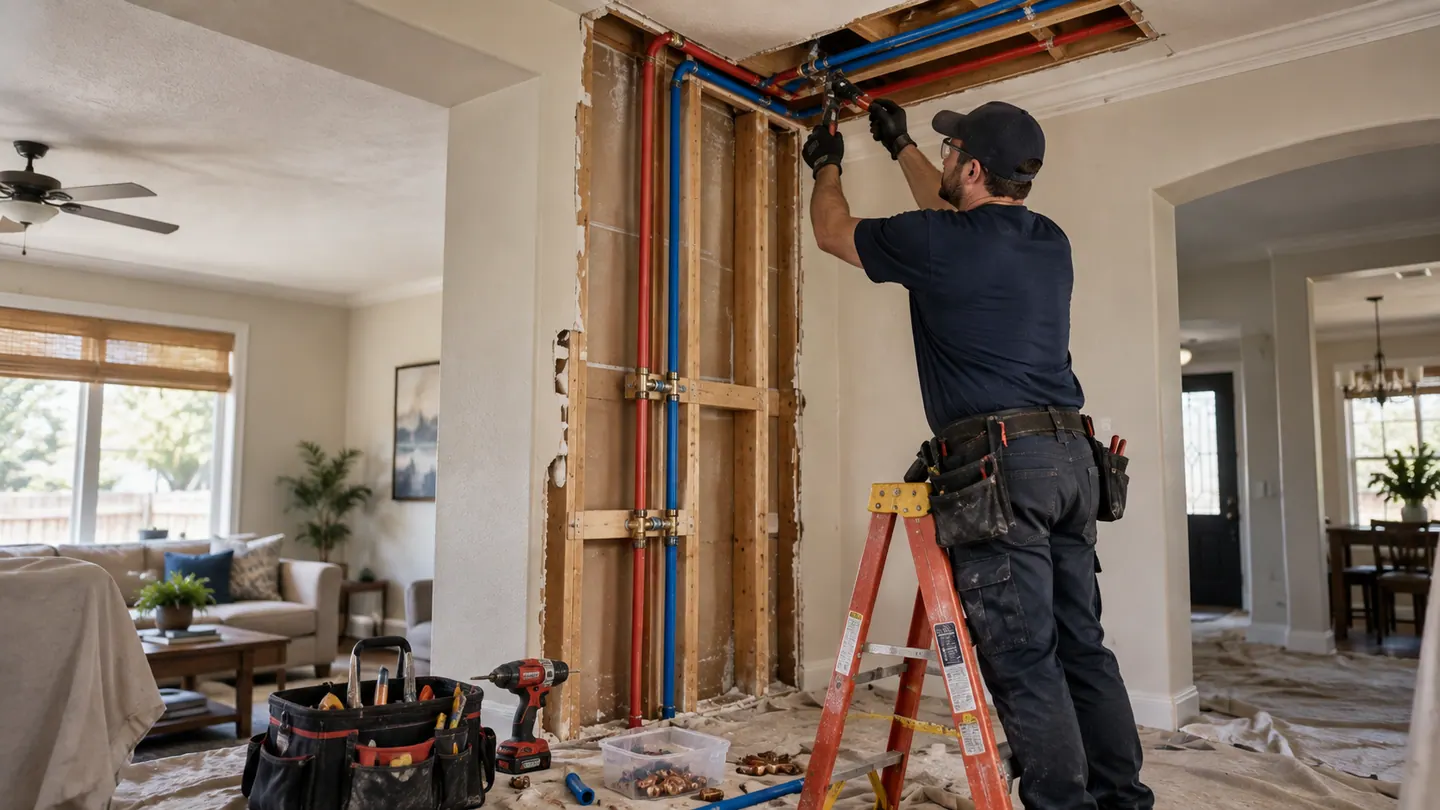
A slab leak does not always mean tearing up the floor
Hearing water run when every faucet is off, noticing a warm spot on the floor, or finding unexplained moisture can be unnerving. If a supply line under the slab is leaking, the first step is confirming the source, not choosing the most disruptive repair immediately.
In some cases, a damaged under-slab branch can be abandoned and a new supply path routed through an accessible wall, attic, or other approved space. In other cases, the route or leak location makes direct repair more appropriate. A bypass is not a universal substitute for every slab problem.
West Fork Repiping Co. helps Fort Worth homeowners think through water-line rerouting options and coordinates qualified plumbing contractor evaluation and installation. We focus on the new route, connections, testing, and the access or finish work involved.
A reroute only works when the new path works
An attic route that looks easy on paper may create temperature-protection or access challenges. A finished two-story home may offer fewer pathways than a single-story house. And the leaking branch must be isolated correctly so the abandoned line does not continue causing trouble.
Ask how the leak was diagnosed, which fixtures the affected line serves, where the alternate route will run, how it will be protected, and which surfaces must be opened.
A clear estimate should compare the realistic access and restoration requirements of available options rather than treating slab excavation as inevitable.
What makes some slab leaks suitable for rerouting?
Rerouting is not automatically a substitute for every slab-leak repair; the leak source and feasible alternate route must be confirmed. Hidden branches may not match visible pipes, and earlier repairs can leave mixed joints or isolated runs that complicate an apparently simple replacement. The contractor should inspect the locations where the system can be accessed and discuss assumptions about concealed conditions before committing to a final route.
For a reroute, first verify which supply branch is leaking beneath the slab. Then compare the proposed bypass route, insulation and physical protection, water-shutoff work, pressure checks and surfaces that must be opened and restored.
A clear plan comes from what is visible and verifiable at the property: existing material, connections, affected rooms, access limits and the building’s normal use. Its neighborhood alone cannot determine the pipe condition.
Consider the path above the slab as a complete job
Bypassing a leaking under-slab supply line can avoid cutting some concrete, but it still creates a new water route. That route must be protected where it passes through walls, warm spaces or framing, and it must serve the right fixtures.
Before deciding, ask how the source was confirmed, how the old line will be isolated, where new access cuts will be made and what will be restored. A reroute and a direct slab repair are different scopes with different consequences.
Compare the full disruption of each option
One quote may include opening concrete; another may open ceilings and walls. Ask about protection, restoration, pressure testing and long-term access, not only the plumbing labor.
What affects slab leak pipe rerouting cost?
Price depends on fixture count, pipe lengths, branch routing, labor access, material, finishes, site restrictions and required permit or inspection work. Temperature protection, penetration detailing and reconnection tests In occupied commercial or multifamily settings, tenant coordination and work-hour restrictions can alter the project as much as the raw pipe quantity.
A responsible estimate should specify replacements by area and material, call out any exclusions and state how changes arising from concealed conditions are approved. Published regional pricing examples for ordinary whole-house repiping should not be used as fixed rates for different scopes. For an accurate quote, the property details and contractor assessment control.
Fixtures and hot/cold branches, joining methods, isolation, testing and applicable permit responsibilities.
Drywall access and patching, paint, ceiling finishes, tile, cabinetry, removal of old material and unforeseen damage.
Questions worth asking before you commit
Can the line bypass the concrete slab?
Sometimes. Once the actual leaking supply branch is identified, a licensed plumber can consider approved alternate routes through accessible areas. The new route still needs proper protection and testing.
Is rerouting always cheaper than slab repair?
No. Wall access, two-story routing, hot spaces and finish restoration can change costs. Compare the complete scope for each feasible approach.
Get the source confirmed before authorizing demolition
Pressure loss, a wet floor, and a high water bill can have more than one cause. Professional diagnosis determines whether you are dealing with a supply line, drain, appliance, or unrelated moisture problem.
Once the leak source is known, the right question is not simply “can it be rerouted?” It is “will this route remain accessible, protected, code-compliant, and dependable for the fixtures it serves?”
Homeowners often focus on the visible flooring damage and understandably want to avoid opening concrete. A bypass still requires careful planning for fixtures and for the hot or cold branch involved. The right proposal explains how the damaged line is isolated, how the new line is protected, and what parts of the property must be accessed and restored.